Virtually there

You may need the flash player to see these images, you can get it here: http://www.adobe.com/flashplayer

The collection enters virtual space

As part of their final project work in the summer term, students from Trafford College’s BTEC Diploma in Creative Media Production visited Manchester Art Gallery to scan a selection of objects from the Mary Greg collection. The scanning took place as a public activity in the gallery atrium and as part of the visit students were given a talk by exhibition curator Fiona Corridan about object display and lighting. The brief for the project was necessarily open as this was something of an unknown area for both the gallery and the college:

3D Visualisation

By combining 3D scanning and modelling with contemporary game engine technology South Trafford College is able to generate 3D web content that may offer museum and gallery audiences a new and engaging way to explore collections like the Mary Greg archive.

The brief is open to interpretation and negotiation with the client. There are, however, a couple objectives that you must achieve:

1.Research, design, model, texture and light a contemporary art space.

2.Scan, model, re-scale and texture an artefact from the Mary Greg collection.

3.Import your environment and object into Unity.

4.Employ triggers within Unity to enable viewer interactivity with both environment and artefact

5.Build an executable from Unity that will embed within a web page

Students worked in groups of five to take the 3D digital scans and use them as the basis for re-staging or exhibiting the collection in a virtual environment. Each group worked on several ideas before settling on one which would form the basis of their presentation. Once the project ideas were agreed, students worked to their own strengths – whether this was working up the original 3D scans, providing illustrations to support their final presentation, investigating and testing display options or building a 3D environment in which to stage the collection.

Towards the end of May, the student groups came together and presented their ideas and work to gallery staff. The outcomes revealed that the original objects themselves were capable of informing an extraordinary range of responses. One group considered the notion that a hitherto hidden doorway in one of the current gallery spaces would lead to a subterranean world where visitors would need to make a slightly perilous journey to view objects displayed in an eerily lit treasure trove environment. Another group took the curious surface decoration of one side of a gaming disc – whose meaning is long since lost – and used this as a motif to build a mysterious almost quasi-religious space where the hugely re-scaled disc became almost an object of veneration. Others produced beautifully modelled and rendered exhibition spaces that were both light and open and often structurally confusing, and that would in some ways unsettle visitors and their expectations of both space and object display.

One group pushed at the boundaries of what could be done with the 3D scans and, using an Augmented Reality plugin and a webcam, demonstrated how the virtual models could be realistically superimposed into realtime video of any space.

As a pilot project the results for the students, the course directors and ourselves were fantastically rewarding and insightful. We have also hopefully established a partnership that can build from this work and further develop how the collection can form the basis for genuinely new types of educational engagement and student project development in electronic creative media.

Get the flash player here: http://www.adobe.com/flashplayer

The MANCHESTER & SALFORD TAKE AWAY MENU ARCHIVE

December 15, 2010 People and places 1 Comment

Pigu Chippy Take Away menu

Yet again I’ve been struck by how, in our working lives, we share space with people about whom we know very little beyond the job they do. Each one of us has a hinterland about which others know so little, nowhere more so perhaps than here at the gallery where almost everybody is involved in some kind of creative practice beyond their day job.

A recent conversation with Mark Page, who works in the Visitor Services team at Manchester Art Gallery, in which we discussed a shared interest in photographing the hidden urban landscapes of the city, revealed Mark as a long-time photographer of the urban environment in all it’s hues and manifestations. His inclusive and non-judgemental vision takes in the less polished, less marketed, often hidden, often scoured, marked or damaged faces of this city full of inequalities.

Of particular relevance here though, is Mark’s ongoing project to document the relentless flow of take away menus that ‘build up behind the door like a techno-coloured snowdrift.’ As an unofficial archive of the unremarked everyday ephemera that we daily ignore, it’s a real treat.

See The MANCHESTER & SALFORD TAKE AWAY MENU ARCHIVE here.

Martin

Student work at the Link Gallery

Manchester Metropolitan University Interactive Arts students were asked to take part in a project to come up with ideas to show off the Mary Greg Collection at Platt Hall in Manchester in 2012. Students pitched their ideas to staff from Manchester Art Gallery on Tuesday 14 December. Read more about the project at the Link Gallery Blog.

Kunstkammer

July 22, 2010 Hidden Stories 2 Comments

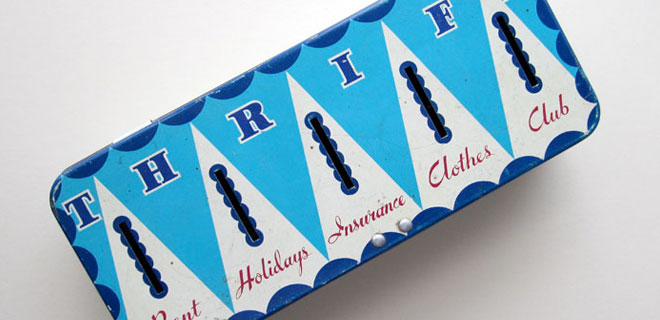
Chad Valley Savings Tin, 1960s

Maybe there’s something in the air, maybe it’s just serendipity. This morning, enjoying the freedom of the first day of a holiday break, I finally found time to follow a link to the blog 0101. Written by Principal Manager of Collection Management at Manchester Art Gallery, Vincent Kelly, the blog documents aspects of his practice as an artist. Vince’s most recent post, A Cabinet Of Curiosities, includes a beautifully photographed assortment of objects that he has collected over his lifetime.

We spend time with people and get to know them through their actions and behaviours, their dress, their voice, the stories they tell, and we carry this loosely forged sense of them with us as an incomplete but passable cipher for their identity. And then, often without warning, we catch sight of a new, previously unknown to us, aspect of their character that enriches our loosely sketched portraits. So it is with Vince’s collection. What connection is there between the 1950s Swedish carpet needle and the 1960s Sindy & Paul go to the Discotheque knitting pattern? I wonder did Vince go to the Electric Chair to hear Maurice Fulton in 1997, and if he did, what memories does he have of it now? I wonder too if the 1953/54 Northumbria District Junior League Winners Medal belonged to a relative or did Vince find it whilst puddling about in his garden as a child.

This collection of wonderful but disparate objects, like Mary’s, forms a gateway into story making, the stories we make in response to them and the stories the collector, openly, or in ignorance, weaves about themselves. Who of us, as Chris notes in his wonderful post The Wicker Basket, knows why we collect what we collect. But one thing is clear, it is the very materiality of stuff, stuff which accrues the marks and dirt of time, the grease and snuff of human touch, that connects us with our existence and the existence of others in a palpable and grounded way. Will we be able to feel the same way about our mp3s and digital videos and photographs when, in some distant future we revisit what we have collected around us, as we do about the Super Eight cine film or the Pinky and Perky 7″ Record? We’ll surely find value in the technological carriers of the information, the PCs, the iPhones, the external hard drives and digital cameras, but what of the immaterial zeros and ones, the bits, the bytes, what will feel about them, what stories will they weave?

Around and about

April 22, 2010 Mary Greg 2 Comments

We’ve had a couple of links to online resources related to John Ruskin from Dr Stuart Eagles. There’s a John Ruskin Facebook page and also the Eighth Lamp, an online Ruskin-related journal.

Stories waiting to be told

As part of ongoing work to extend the reach of the Mary Greg collection, students from Manchester Metropolitan University 3Dimensional Design course visited the gallery stores to undertake research for an open ended six week design brief. This video captures the student’s enthusiasm as the wealth of the collection is revealed to them.

Blog maintenance

April 5, 2010 Developments 1 Comment

Over the next few days we’ll be updating the structure of the blog which may mean that some posts may be temporarily unavailable, or not where you found them on a previous visit. The continued growth and diversification of material added to the blog has moved us to attempt to organise content in a more meaningful and accessible way. We’re sorry for any temporary inconvenience this may cause.

Stories waiting to be told

February 9, 2010 Student Projects 1 Comment
Sarah and Liz exploring the collection with the students

Sarah and Liz exploring the collection with the students

All morning, between the hawking of the crows on the roof and the digital shutterclicks of half a dozen cameras, there have been repeated breathy outbursts of “Ooooh” and “Wow, look at this” and “That’s just beautiful”. The Mary Greg Collection continues to cast its magic on the unsuspecting.

Throughout today and Thursday, students from Manchester Metropolitan University 3D Design course are visiting the gallery stores to begin research for an open ended six week design brief. Along with Sharon, the course tutor, Liz and Alex have given a brief background to the objects before taking the students on a tour of the treasure trove. As each new cupboard is opened or drawer slid out there have been gasps and intakes of breath.

It’s not always easy to fully understand why there’s such genuine wonder expressed as the collection is unfolded but its context surely plays an important part. Housed in steely grey cabinets in a squeaky floored Victorian gallery and surrounded by a mute audience of portraits from the collection hanging on the walls, the objects seem almost magically shrouded from the present, as if locked in some frozen indeterminate past. This is not the modern clinical climate controlled storage facility you might expect, it’s shadowy, mysterious and not somewhere you’d like to find yourself alone at midnight.

Sarah Rainbow, a gallery conservator, guides the students through common sense object handling requirements, the donning of gloves and perching of precious objects on miniature pillows. This all adds to the reverential mystique that the objects seem to accrue.

For the first time in many cases, these objects are being given a level of rapt attention, are being drawn, photographed and written about, being un-shrouded. It will be fascinating to see how each student moves on with their research and what their eventual outcomes will be.

There’s more images from the morning on our flickr pages.

Crowdsourced Treasures

December 7, 2009 Developments 1 Comment

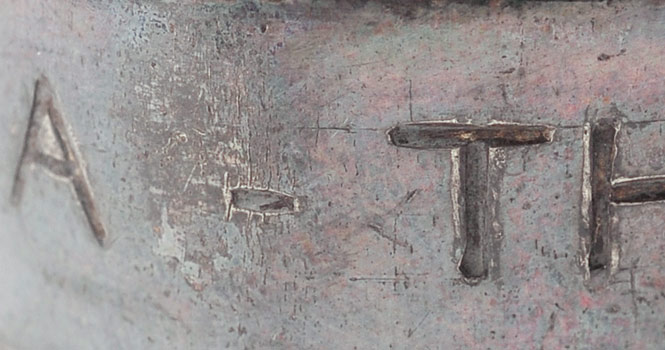
athimble
In truth this post should have been written last Wednesday following Tuesday evening’s Social Media Cafe (smc_mcr) when, along with David Edmundson-Bird from MMU Business School, I presented a ‘What-if’ idea to a group of about 15 keen social media types. It was a conversation with David almost a year ago at an earlier smc_mcr that had kicked off the idea of crowdsourcing the documentation of Mary Greg’s collection in the first place. The presentation was called Crowdsourced Treasures, a social media action to open up access to the city’s art collections.

David has much loftier ambitions than me around increasing public access to the collections in storage and very much played devil’s advocate in the discussion that followed. And there was some genuinely engaged discussion too. Not everybody was convinced that unmediated access to photograph, record or write about objects from the collection would be a good thing. Surely, it was argued, the role of the gallery was to provide the authoritative context to the objects, providing a way-in for the uncertain viewer. The hierarchies and taxonomies developed over the last century or more have an important place and help provide threads of meaning and connection between disparate objects, documentation without these wouldn’t really be documentation. Or, would it?

Ben’s photographs helped bolster the proposition enormously, here was a purely visual record that elevated the object to a different aesthetic realm. Does it matter that you don’t realise that what you are looking at is a thimble if you are entranced by the sheer quality of surface or by its simple form? Is it always necessary to know everything about the object, or can you take from it what you want or need? There was some agreement that any social documentation produced would be supplementary to the ‘official’ documentation, it couldn’t replace it.

The idea of producing an open invitation to the stores to take part in a crowdsourced action did hold some appeal and there were a number of people in the audience who would be keen to take part if it did happen. Perhaps the single most interesting idea came up in discussion after the presentation. Natalie Ireland, Manchester Science Festival Director at MOSI, suggested that perhaps the best way to test the idea would be to hold an smc_mcr in the stores themselves, bring the social media advocates right into the collection as a piece of action research. This seems like a real way forward and we will plan how we might make it happen early in 2010.

Links

Social Media Cafe Manchester smc_mcr
David Edmundson-Bird @groovergenerator
Natalie Ireland
@McrSciFest

Sarah-Clare Conlon, author of the Words & Fixtures blog, has posted about the proposed social media action too, Rumble in the Jumble. Ignore the apparent initial cynicism, the collection worked its magic on Sarah-Clare too.

MuseumNext

September 22, 2009 Developments 3 Comments

Following a rather nervous discussion about how we might proceed with a public documentation project of the Mary Greg archive, Liz and myself took the plunge and sent a proposal to MuseumNext. Our proposal has been accepted as a ‘wild idea’ and can be found here: http://www.museumnext.org/blog/

MuseumNext takes place on Thursday 22 and Friday 23 October.