Mary on Tour

March 20, 2014 Artist Responses Comments Off on Mary on Tour

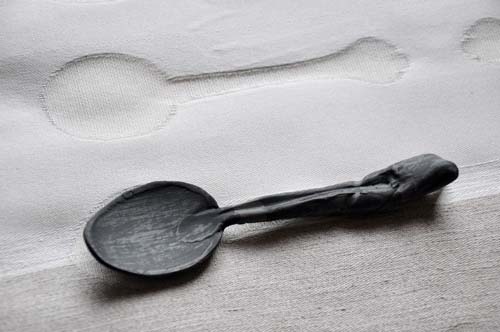
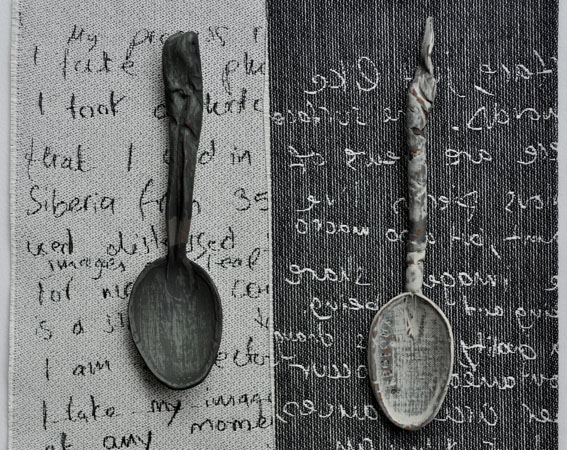
Those of you who have followed the development of my collaborative, creative response to the bygones spoon collection with weaver Ismini Samanidou, may be interested to know that the resulting piece has been exhibited at venues nationally and internationally.

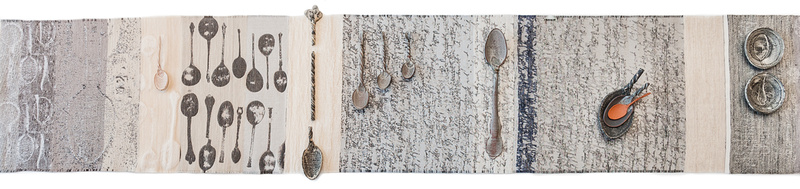
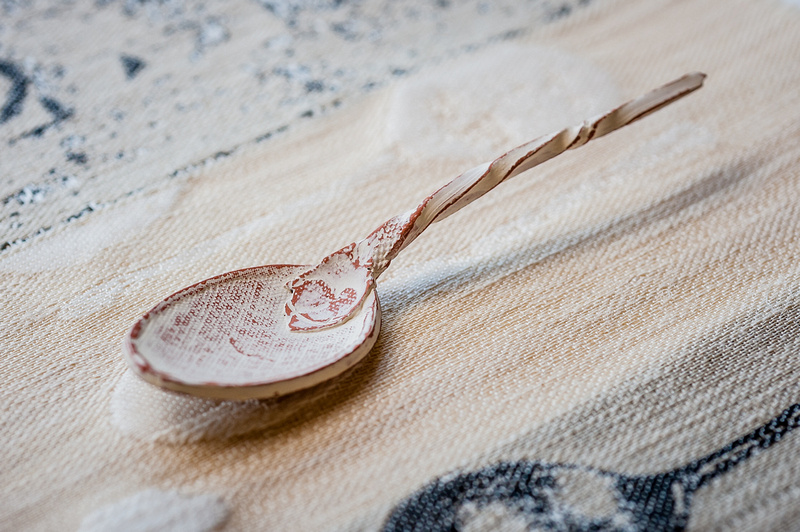
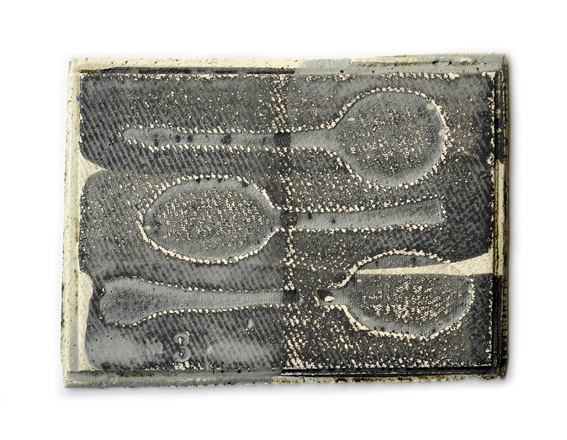
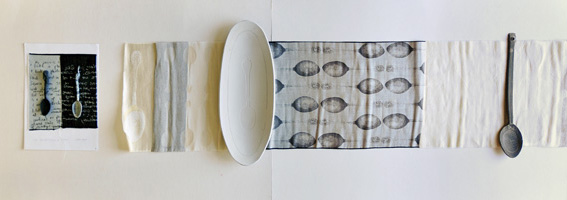
Table Runner was exhibited in Utensil at the National Craft Gallery of Ireland, New Directions in Contemporary Craft at Mottisfont Abbey, National Trust and Pairings at Contemporary Applied Arts, London.

The collaboration was also featured in Samanidou’s solo show, Topography: recording place, mapping surface, touring from the Crafts Study Centre in Farnham to the Centre for Craft, Creativity and Design in North Carolina and the Weber Center, Utah, USA.

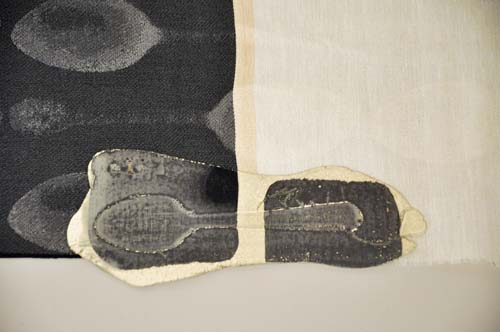
Table Runner (overview) – hand built ceramic and digitally woven cloth, 1500mm x 350mm

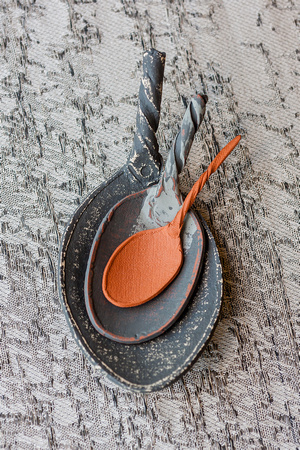
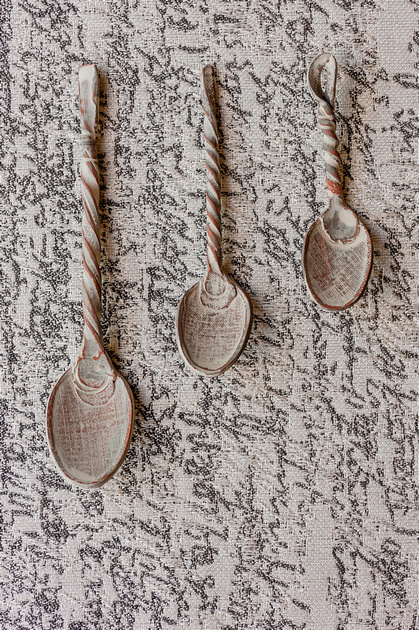
detail, three spoons, three voices

acknowledging value in the damage and wear of everyday use


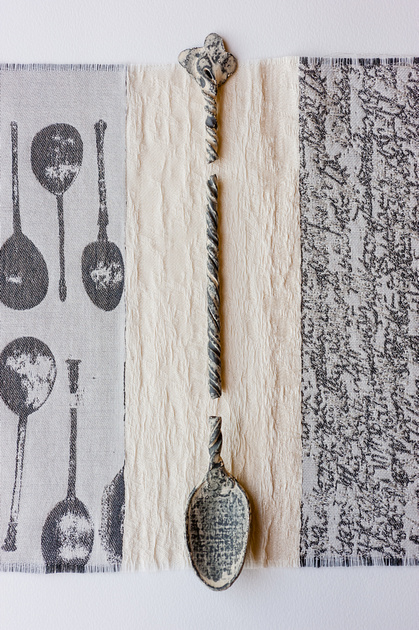
the contemporary emerging from the historic

paying homage to the past, ceramic spoon placed within the woven shadow of it’s predecessor

Student response – Sharmin Nessa

April 19, 2012 Student Projects 1 Comment

Sketchbook drawings of worn wallpaper in dolls house

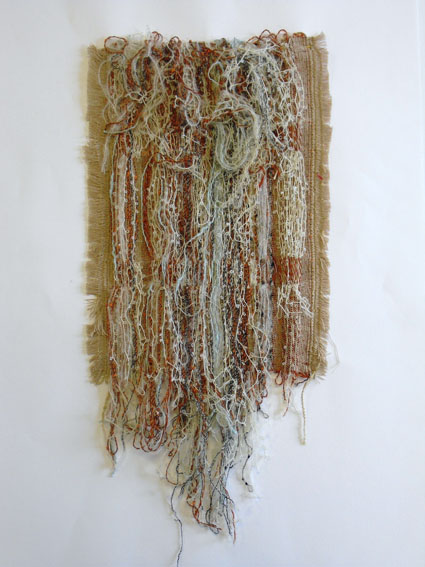
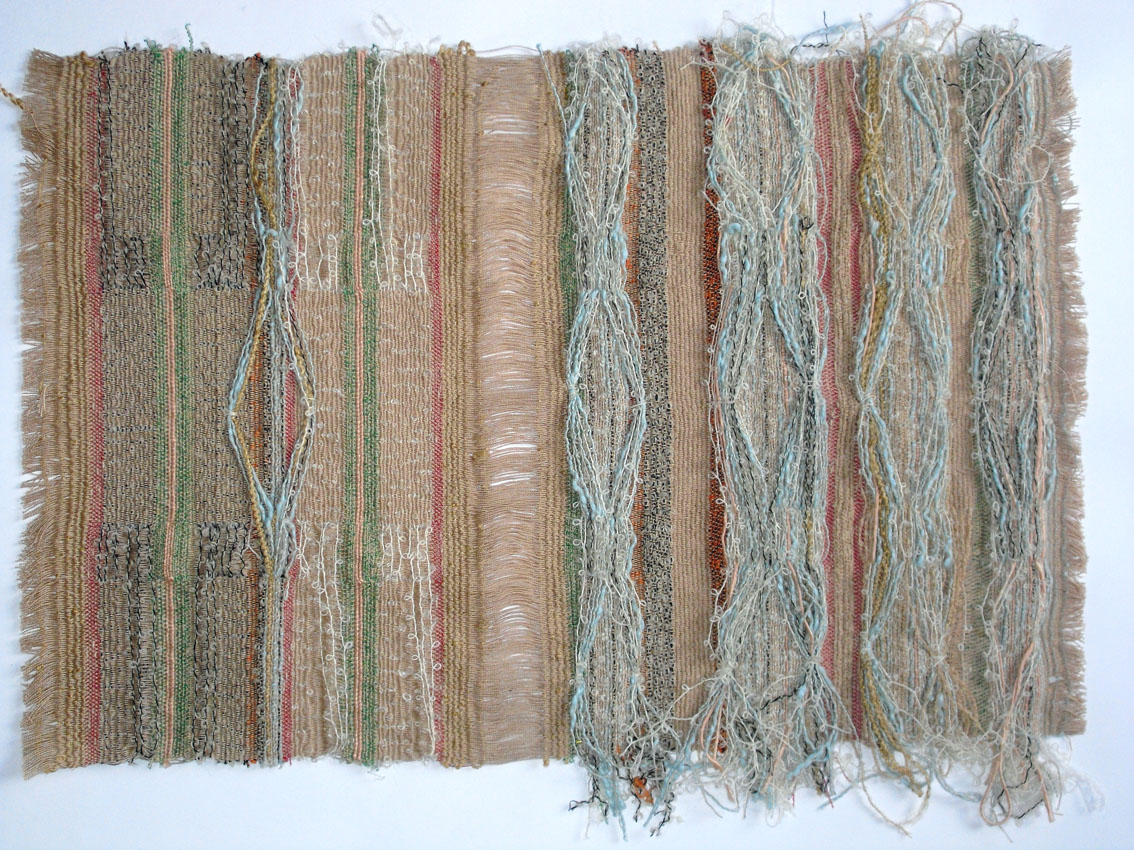
After being inspired by the 1850s doll house form the Mary Greg collection at Manchester Gallery, I was eager to develop a body of drawing which I could translate into the specialism of weave.  I was particularly fascinated by the 19th century wallpapers in the miniature houses, which was the starting point to my drawing development. The gestural marks and textures expressed in my drawings were the characteristics I intended to capture in my weave samples. I feel I have represented the marks in my drawings by using textured yarns and creating weft base samples. I envisage the woven samples being developed for domestic interiors.

Sketchbook drawing

Woven textile sample responding to drawings

Weave sample

Table Runner 2

November 5, 2010 Artist Responses, The Letters Comments Off on Table Runner 2

This project has been my main focus recently as my collaboration with weaver Ismini Samanidou intensifies!  Recent developments include some further refinements to the clay palette based on the initial woven samples made by Ismini on the jacquard loom.  I particularly liked the section woven from digital images of some of the spoons in the collection and have been working the clay to try and capture these characteristics.

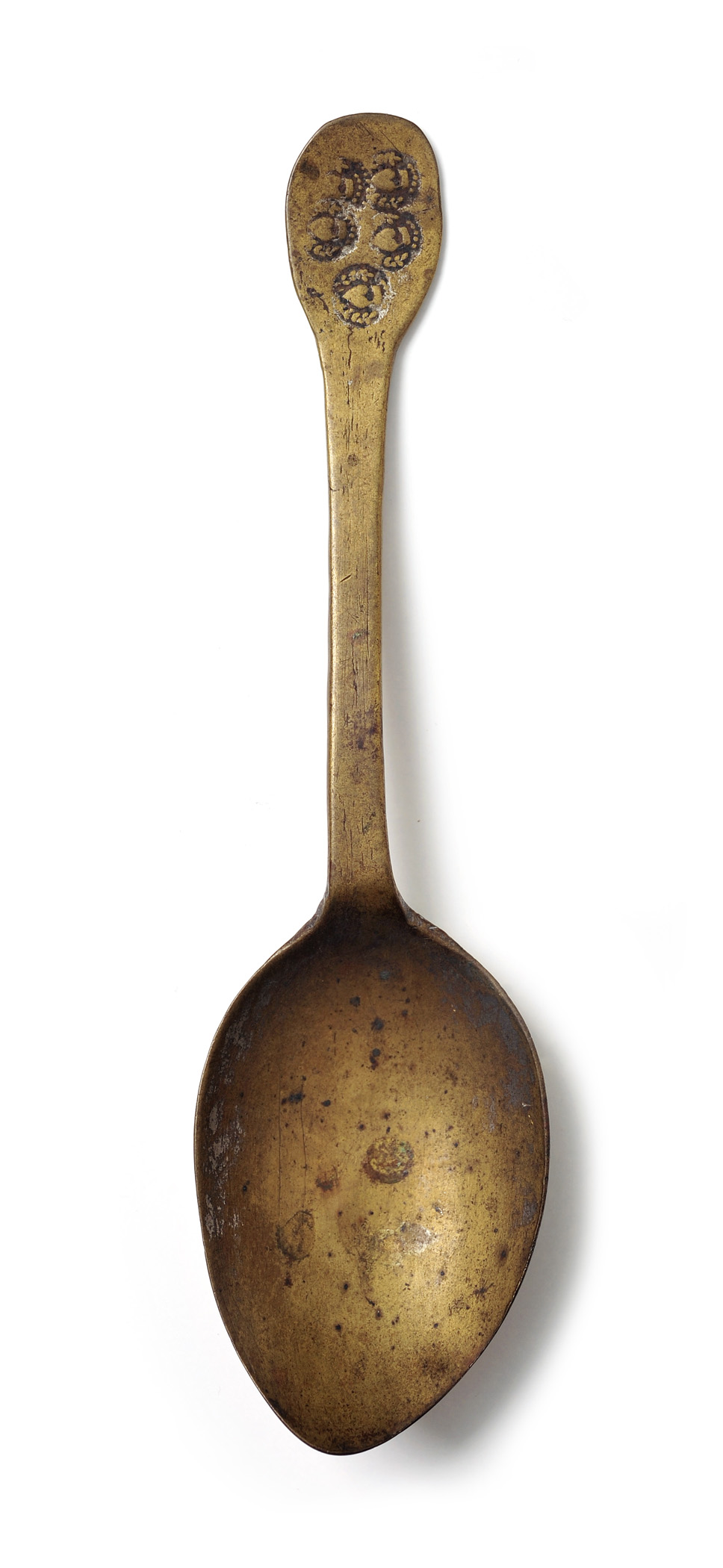
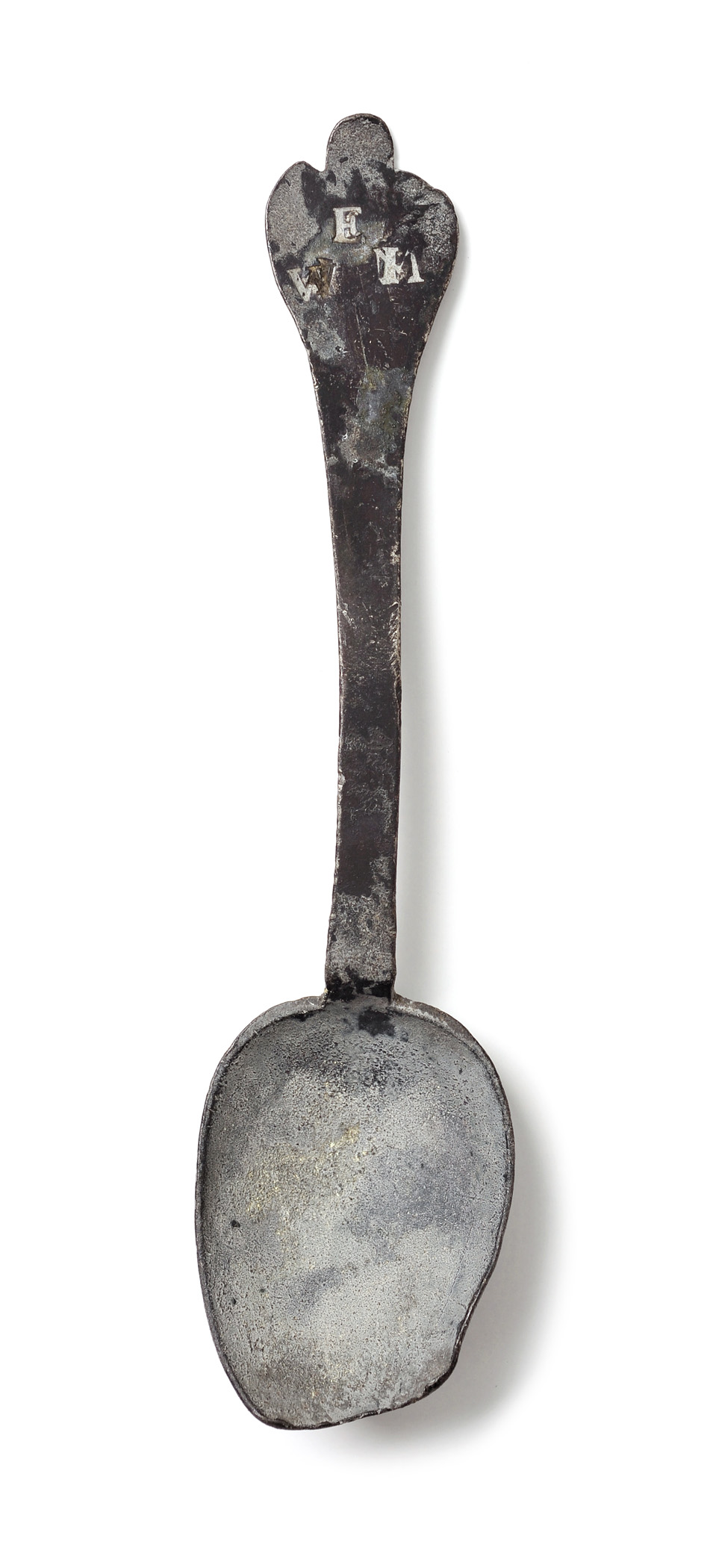
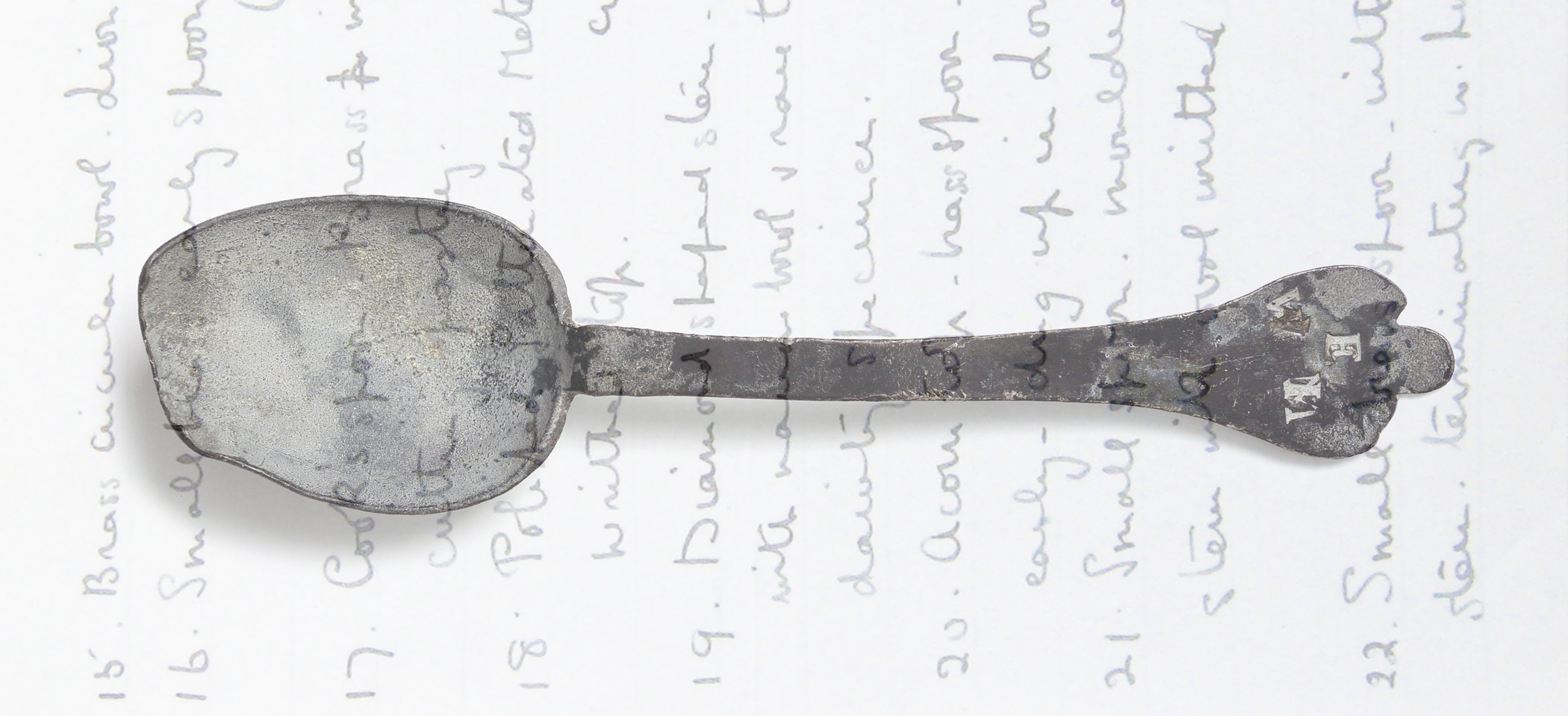
Bygones spoon, worn and distorted through endless stirring

Bygones spoon with the initials of an unknown family

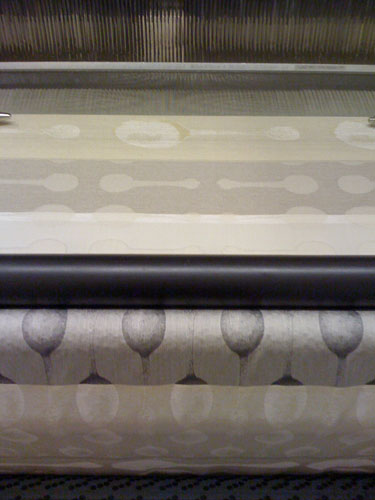
Cloth samples being woven on the jacquard loom

Detail of Bygones spoon woven into cloth

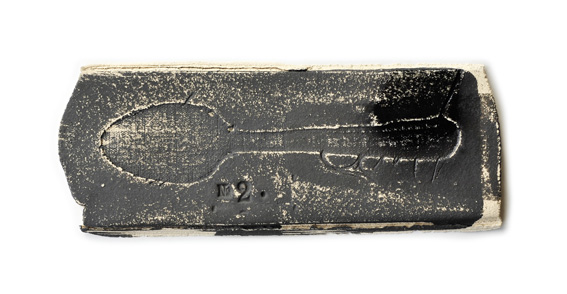
Translating the woven cloth back into clay

Exploring overlays of stained clay

clay colour sample responding to woven cloth

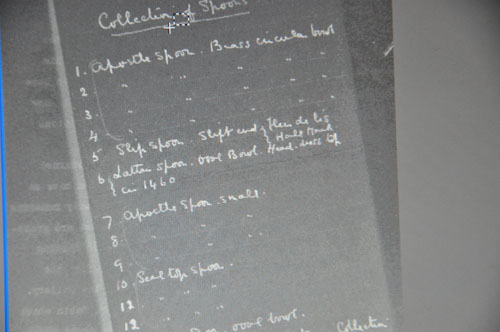
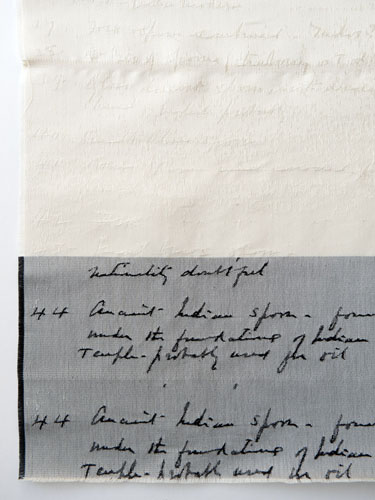
We have also been playing with ways in which text from the archive letters may be brought in to the composition.  In one of the letters there is a handwritten inventory of spoons sent by Mary to the collection.  We have been playing around with somehow combining this alongside images of spoons from the collection into the cloth.

Digitally overlaying the spoon inventory over the spoon

spoon inventory on computer screen as part of the designing and weaving process

woven spoon inventory

It’s all looking very promising but there are still a number of refinements to be made.  We are still trying to achieve greater subtlety and richness.  The cloth samples to date are still a bit too graphic visually. We want to work on that and move toward a more abstract outcome, at least in parts.  Physically the cloth is a little too thin and mean so we want to explore further combinations of yarns to yield a thicker fabric with a richer texture.  We also want to warm up the colour palette a touch and perhaps introduce some creams, golds to reflect the colour palette of the range of metal spoons such as pewter and brass.  So still plenty to do but all very exciting!  Sharon

Rosemary Snead – Student Response

November 5, 2010 Student Projects 2 Comments

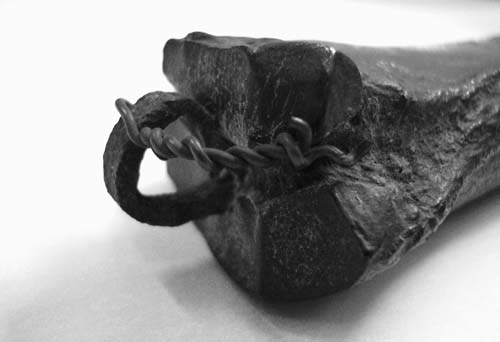
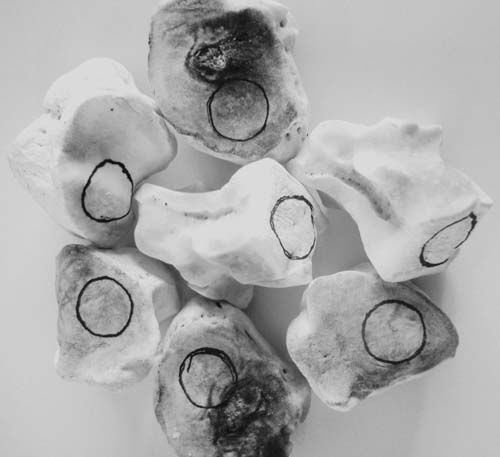
Curious blackened bone with metal loop insert and twisted wire in the Bygones collection

Definitely uncanny, maybe grotesque. A bit wanting, how they were at the front of the drawer like that. Driven by some lonely bones, a peripheral fluke in the Mary Greg collection. Bones without a body separated from their beginnings with no story to tell. My work says ‘come close, go away’…all at once and demonstrates that the ugly and the beautiful are both worthy of being seen.

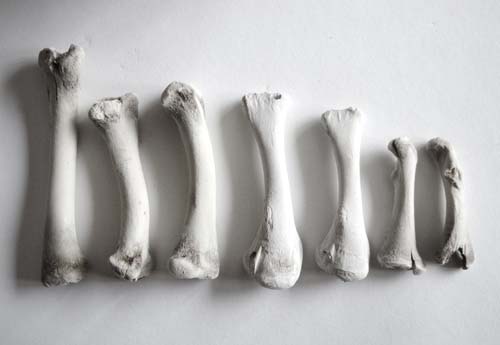
‘Propa Butchers’ of Bilton Grange supplied me with a selection of bones to play with. The cleaning of these bones was a very time consuming and obnoxious process; I do not have the words to describe the smell. The bones made a protest like squeal as they boiled in ugly water yet they became almost pretty as they dried out.

All bones, to me have a distinct element of dichotomy. The idea of a person wearing a cow’s foot on their hand or a chicken’s vertebrae on their blouse…a home for a bone, no longer lonely.

Chicken bones after boiling

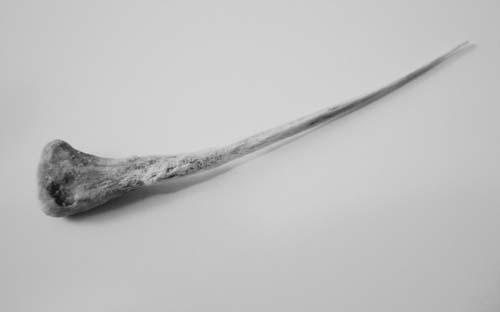
Chicken bone pin

preparing cow bones to make into rings

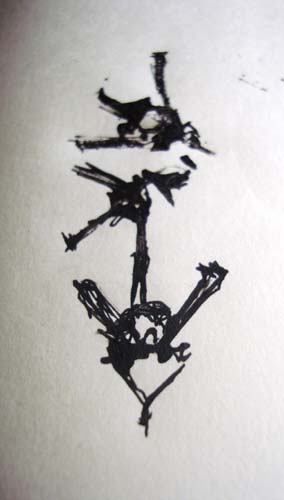
Drawing of chicken vertebrae

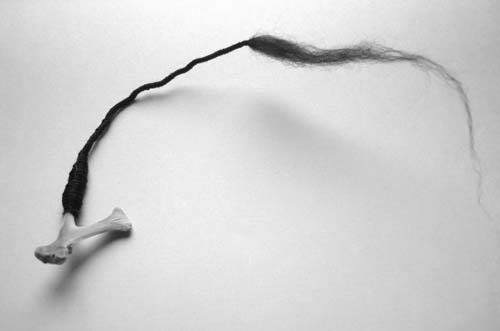
early idea combining bone and yarn

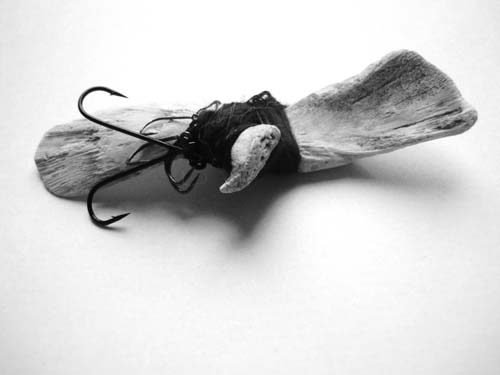
Further developments in bone, yarn and fishing hooks

Joe Hartley – Student Response

November 4, 2010 Student Projects Comments Off on Joe Hartley – Student Response
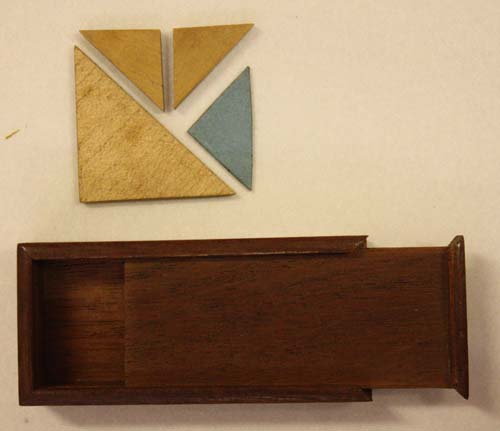
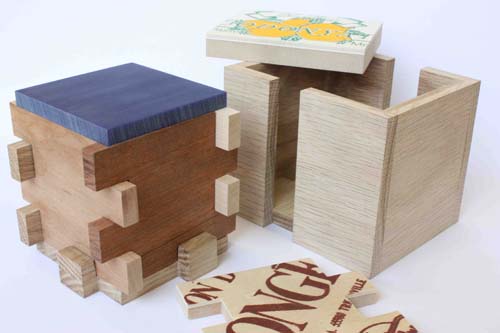
Bygones box containing puzzle with a missing piece rplaced by a bit of blue card

Bygones box containing puzzle with a missing piece replaced by a bit of blue card

Currently showing in the Object Memories showcase in the Craft and Design Gallery at Manchester Art Gallery (until November 29th) is MMU 3D Design student Joe Hartley’s response to the Bygones collection.  He writes: –

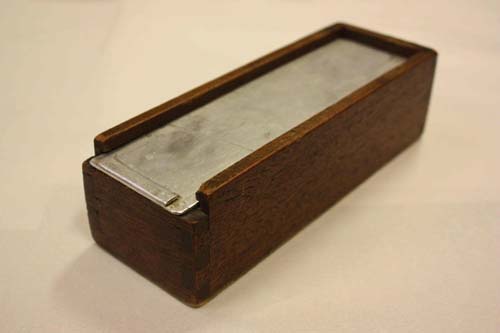
When I first visited the Mary Greg collection I was instantly drawn towards the slide lid domino style boxes, one of the reasons for this was because my own pencil case, an old domino box that I had with me at the time looked just like it and could easily have belonged in the collection.

I especially liked one box with a wooden puzzle in it. A piece of the puzzle had been lost and someone had replaced it with a piece of blue card.

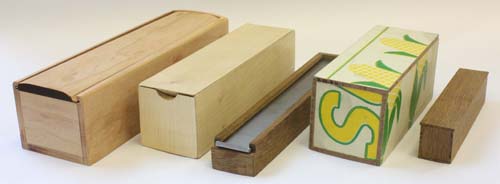
I instantly began exploring different ways of making boxes using whatever materials I could get my hands on like pine fruit crates and mahogany pulled from a skip, one box was even ceramic. Through making many boxes I came across a way of using finger joints to make a box that could be dismantled and rebuilt in different ways, a bit like a puzzle.

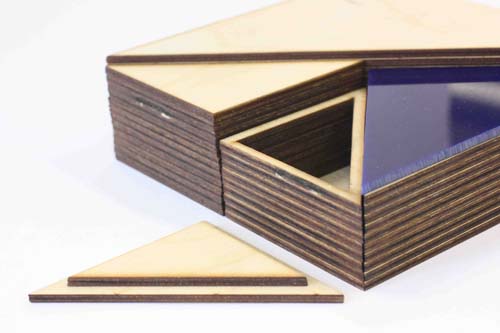
The final box, which deconstructs and stacks into another box, has an oak base with side pieces made from cherry, ash, mahogany and reclaimed plywood, it has a blue Perspex lid that’s supposed to reference the Bygones box with the blue piece of card.

My pencil box

Some of my early boxes

My version of a puzzle box - individual boxes that can be put together in different ways

Puzzle box within a box

Liz Milner – Student Response

November 4, 2010 Student Projects Comments Off on Liz Milner – Student Response

The initial objects of inspiration from the Mary Greg collection were the doll’s house items within the Craft and Design Gallery. These inspired me as they are objects that have transcended hundreds of years, and maintained their relevance as toys and collectors items in their own right. I developed this idea by exploring the potential narrative of these miniaturized objects, and how the viewer interacts with handmade pieces on a small scale. The aesthetic is developed as found and made objects are forced to interact. Traditional needlework skills and Victorian imagery are re-contextualised as I apply them to my ecological concept of miniature textiles. Digital print and hand embroidery on a small-scale give rich detail and a sense of preciousness, evoking the delicate tactility and intimacy relating to the handling of the collection.

Horn-Books (A Student Response) – Nousheen Leila Saboonpaz

July 21, 2010 Student Projects 1 Comment

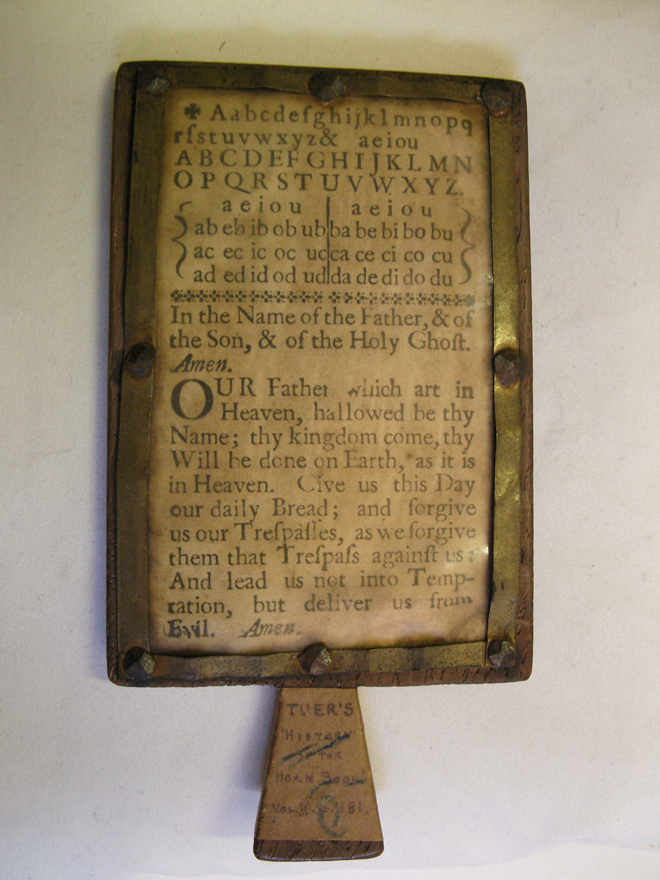
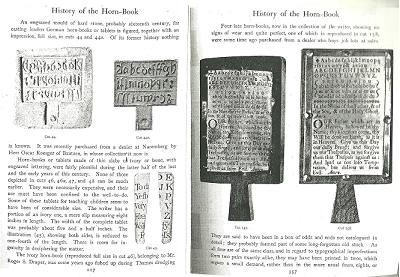
At the Mary Greg handling session I was completely overwhelmed by the vast amount of objects the collection held, I didn’t know where to start with picking out something to set my project on, I could have happily spent the whole day just opening up the cabinets. But a few objects had really intrigued me, these where the Horn books, which I found out where used as learning aids for children. One of the books had a sticker on the back, onto which someone had written “Probably never been used”, who’d written it..I don’t know…Mary Greg herself? Its a possibility. I took as many photographs as I could and headed to the All Saints Library, where I found a book called “History of the Horn-Book”, which to my surprise had never been taken out from the library. In the book I found images of the horn-books I had seen in the collection (pages 117 and 357), along with some beautiful drawings of Horn-Books being used, worn and enjoyed. 

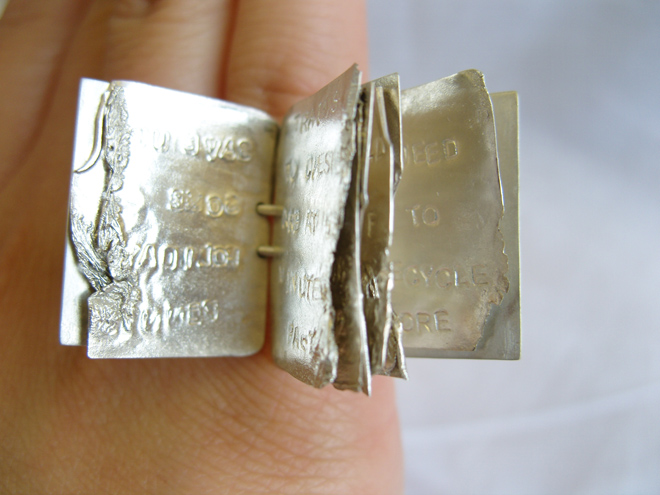
 From what I had discovered in my research I have created jewellery which can be worn and interacted with, just as the Horn-Books where. I wanted my pieces to be large and a burden to wear. The books hold personal chores, sort of a to do list of things I am always putting to the back of my mind, and daft things that I can never remember, the 7 times table for example, and little rhymes from school, I have made my own Horn-Book effectively, something I enjoy wearing and will always remind me of what I have taken from the Mary Greg collection.

  Nousheen Leila Saboonpaz

One of the horn-books in the Mary Greg Collection

books almost identical to those in Mary’s collection in “History of the Horn-book” from the MMU library

Page from the book showing horn-books being worn

One of my responses in metal and paper

a wearable one with pages open

Table Runner

I have an idea to somehow put Mary’s spoons, hidden away for years in a drawer at Queens Park, back on the table. Inspired by the table runner that Mary sent out to the collection at Timaru in New Zealand I have been collaborating with weaver Ismini Samanidou on a table runner which uses a combination of  images of the spoons in the archive and clay spoons I have made in response.  We are still playing and sample making, exploring very subtle weaves and more dramatic combinations, trying to reference the worn surfaces and edges of the spoons, perhaps incorporating some text from the letters, maybe the spoon inventory.  Through all of this we are discovering the similarities and differences between cloth and clay and learning ways in which the two can be brought together.  It is proving to be a really stimulating project.

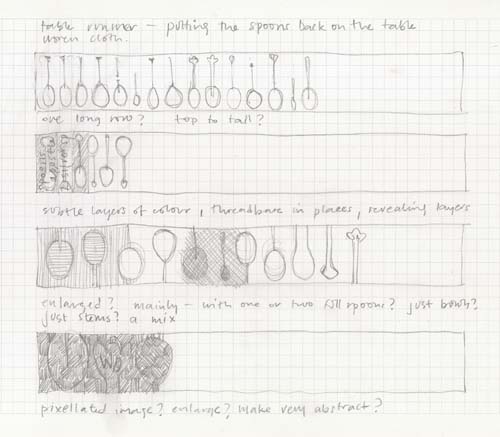
thumbnail sketches of early ideas

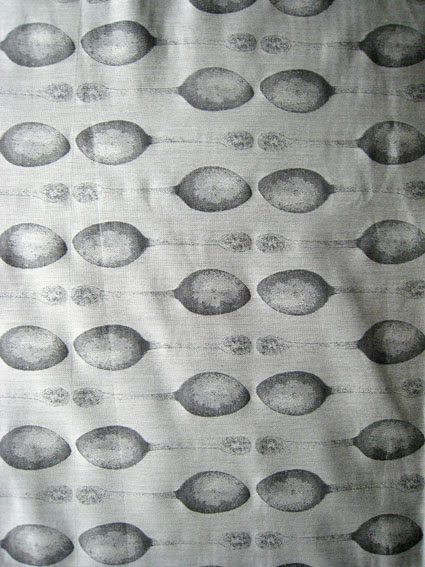
Spoons from the collection woven into cloth

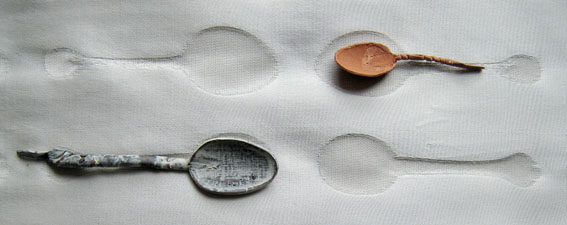
Subtle weave with ceramic spoons nestling

shadow of spoon woven into cloth

Ceramic spoons over woven text

At this early stage we are playing with varying combinations of cloth and clay – clay spoons sitting on cloth surfaces, cloth spoons rolled into clay dishes, images of clay spoons and surfaces woven back into the cloth.  I like the notion of a seamless transition between the old and the new, the cloth and the clay, the analogue and the digital, the hand and the machine, and would like this to be reflected as the work develops.  Sharon

Modeling the idea on the table in cloth and clay

Silhouette 3

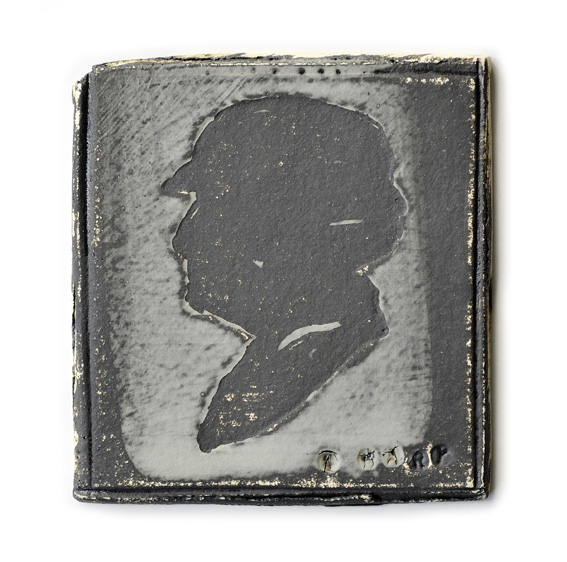
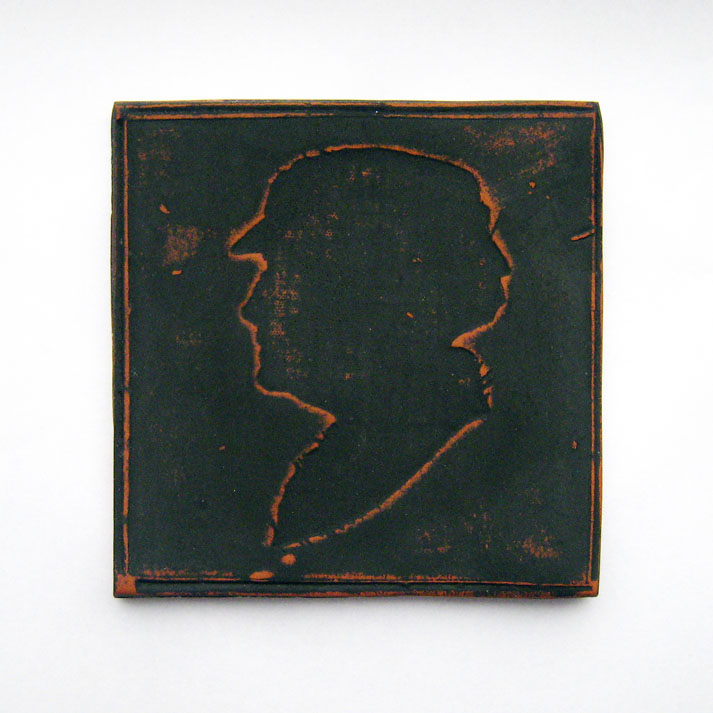
I thought I’d show you some colour samples fresh from the kiln that I’m testing out for the silhouette dish.  I’m trying various combinations of black and white with reference to the original, paper cut silhouette.
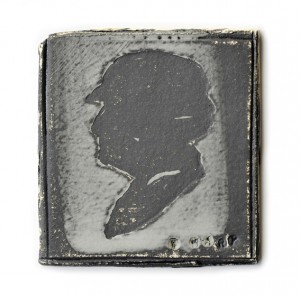
Dark grey slip with white over

I need to take more care when applying the resist to mask out the head as the resulting edge isn’t crisp enough.  I need that edge to make the same visual impact as the paper cut edge of the original.

I am considering using a touch of glaze, perhaps just on the head, perhaps just as an incidental splash, to draw out some further contrasts and animate the surface with reflected light.  However, on this test the glaze has drawn out the black pigment in the grey slip too heavily and shifted the focus from the head to the glaze splash, so I can see I need to be careful how I handle this.

Red clay, grey slip with white over and a splash of glaze

I normally work with a white clay base as it shows colour well but I have also recently been working more with red terracotta.  I like the bold colour contrast of the red clay with the black slip and this particular combination gives a cleaner edge around the profile when the black is rubbed away.
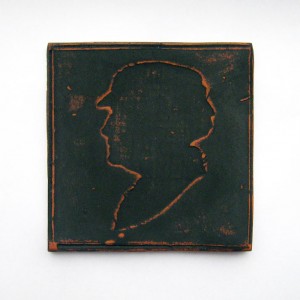
Red clay with black slip

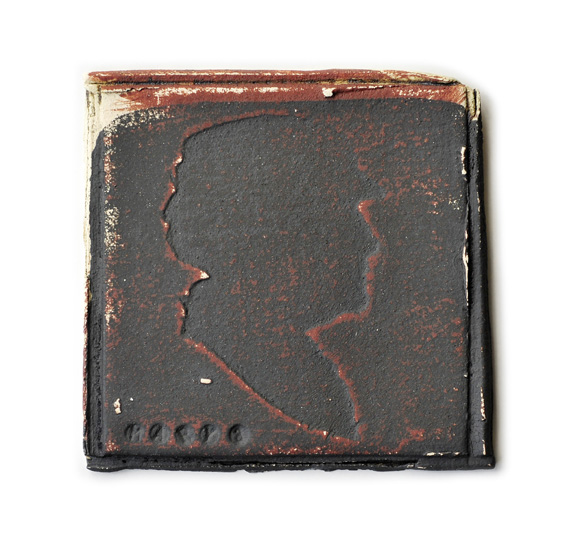
However, I have found that the red clay warps much more than the white through the drying and firing process (no matter how careful I am!) so I have tried using a red slip on the white clay.  Whilst this solves the warping problem the colour combination isn’t quite as dramatic.  So blending red clay with white, or buying a grogged red clay might be the next step if I choose this palette.  I also turned Mary round so she’s looking back at us, or with an idea that there could be two, one facing the other!
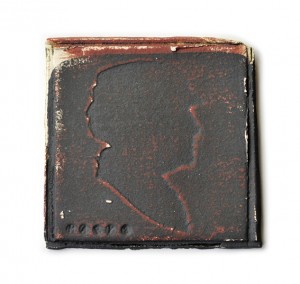
White clay, red slip, black slip over

The tests have also shown me that I’ve lost the detail of the netting around the brim of her hat and I need to think about whether this is important and if it is how I can bring it back.  Either some other form of mark making in the clay or other forms of finishing post firing such as glaze, enamel or transfer.  I was already planning some transfer lettering for the inscription, so this may be an option if I think it’s necessary.

Decisions about the work are made through the sample making process and all the samples are made with a question in mind, testing out the theories (as theory is often very different in practice!), considering the options, feeling confident that the right choices are being made.  As I move towards resolution, I need to feel sure that the final piece is the best it can be.

Perhaps if you are reading this you might care to comment on some of these deliberations.  As the idea is still in progress you have an opportunity to affect the outcome.  All tutorial advice will be carefully considered!  Sharon

Silhouette 2

June 17, 2010 Artist Responses 1 Comment

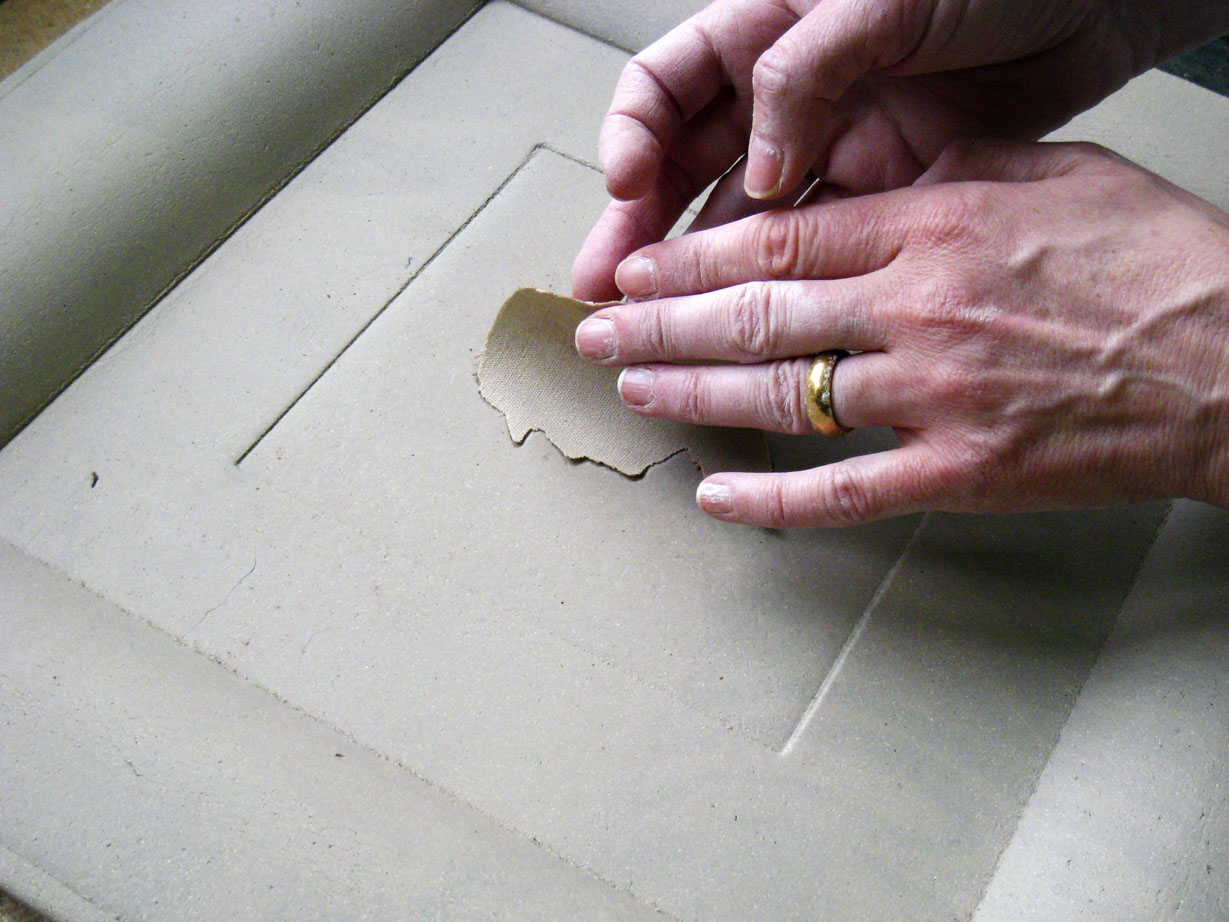
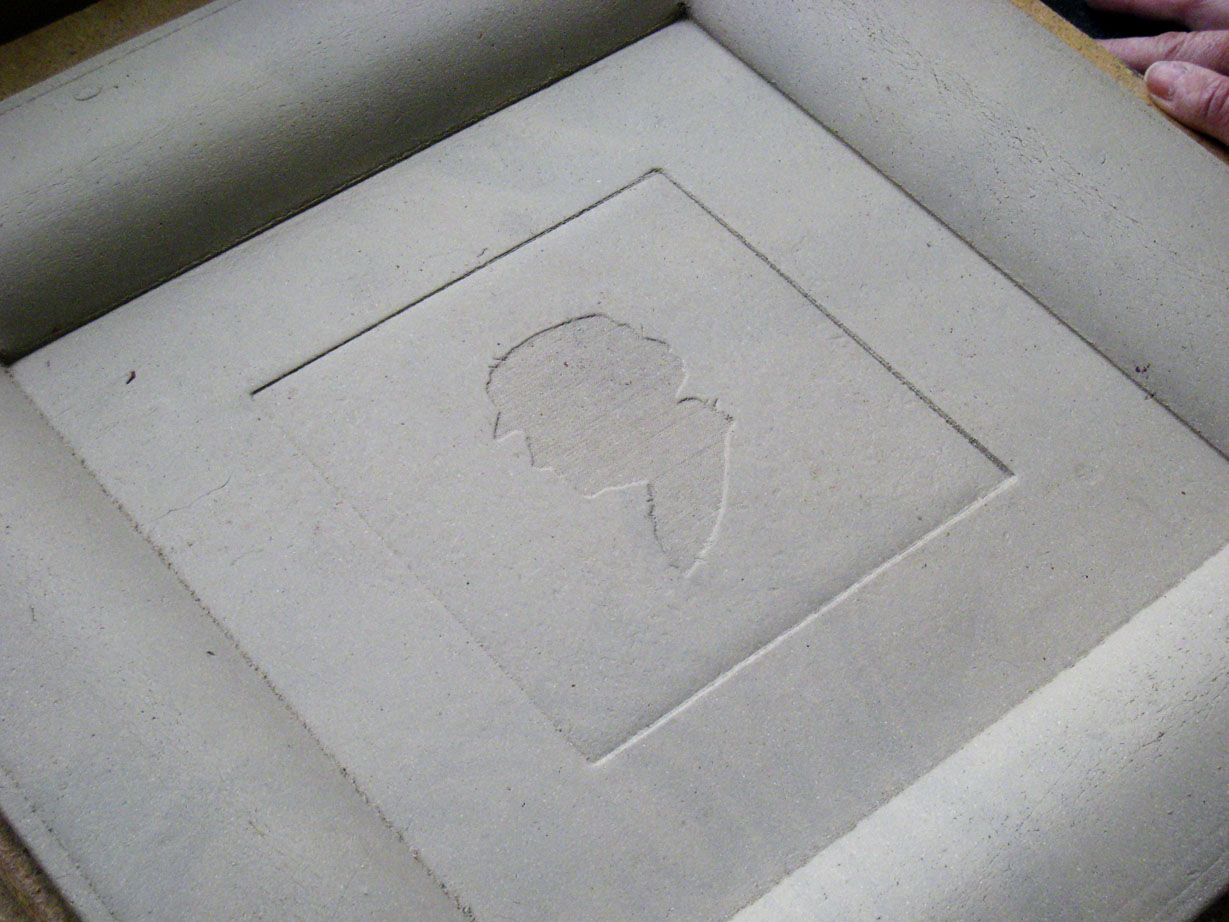
The creative process can be a funny business! I had all sorts of plans for things to make, none of them based on the silhouette of Mary, but I just couldn’t seem to get it out of my head!  When that happens it’s best just to go with it, so I’ve been developing this idea for a commemorative dish for her. I really wanted to keep the simplicity of the silhouette and use it as a focal feature, the border of the dish acting as a frame for the image.  I think it’s promising.  I now need to develop the palette as I have a few options in mind, mostly building on the black and white contrast of the original cut out.

Sharon
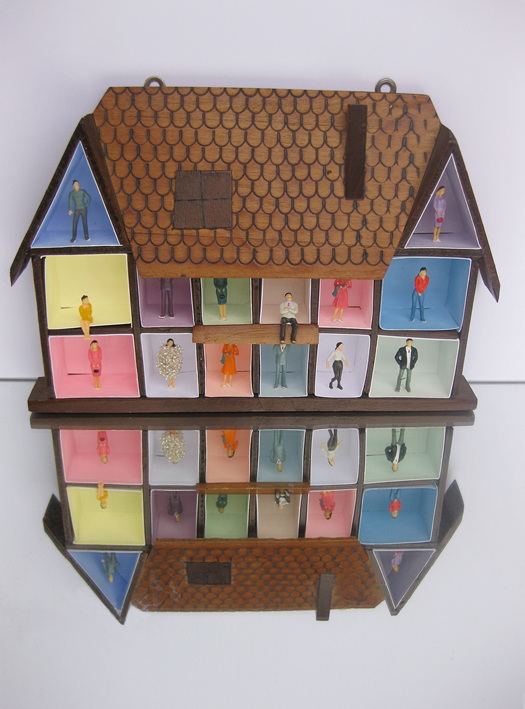
cloth silhouette of Mary Greg

Removing the cloth template

Impression in clay
Finished dish awaiting colour