Caroline’s Dance Card

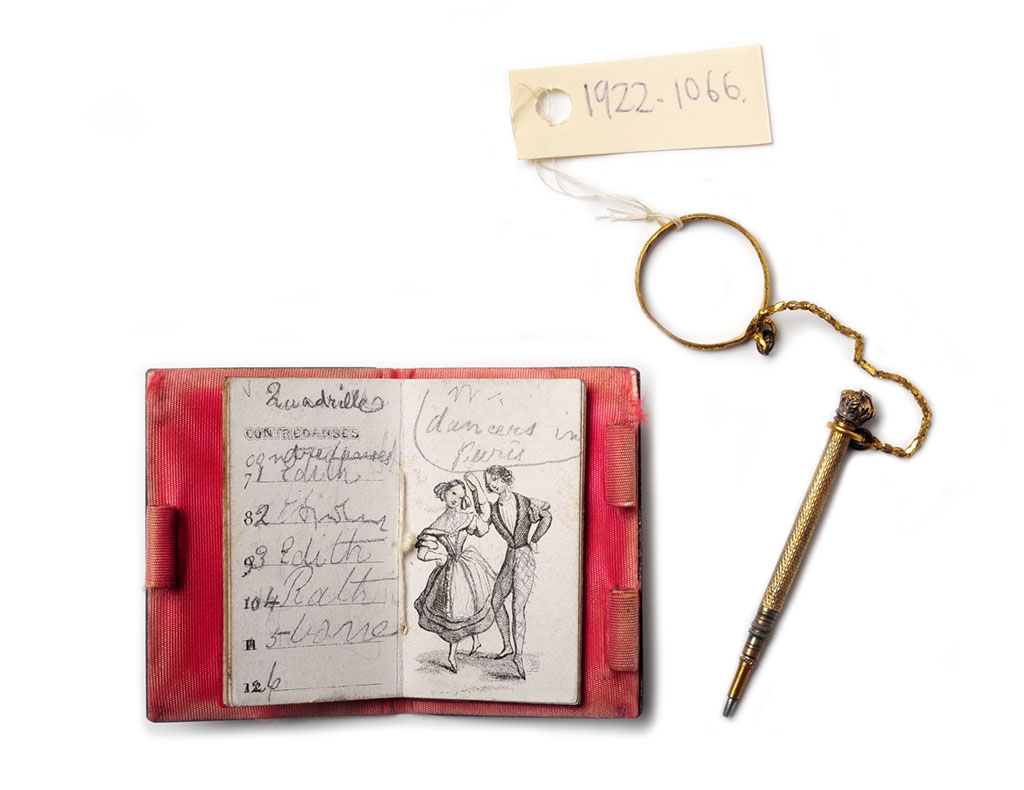
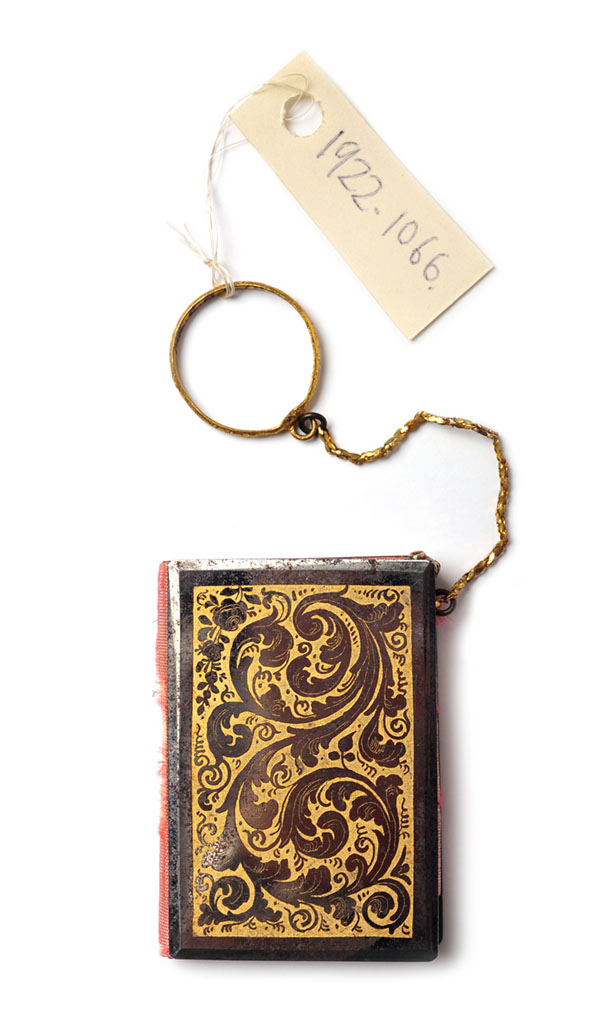
Sharon asked me to find out more about Mary’s sister’s dance card, which was from a place called Greenbanks and dated September 19th 1847. There were a few names on the card including Mr. P. Rathbone and Mr. Shelley.Dance carddance card open
With the Rathbone link I found out that Greenbank’s is a house in Liverpool that was owned by another notorious  family the Rathbones, who are still known today for their philanthropist ideas.  Originally Greenbanks was their summer home but eventually it became their permanent address and was prominent for parties and functions and people would attend to ‘be seen’ and promote some philanthopic opinion or scheme.
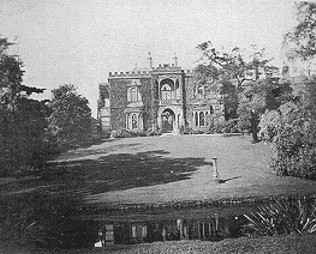
The family home of the Rathbone's

Greenbank House

The first son always seemed to be called William (of course!) and it would have been William Rathbone V’s residence when Caroline attended a dance there. Interestingly William was married to Elizabeth Greg of Styal (daughter of Samuel and Hannah Lightbody) in 1812 so perhaps the Hope family had close links with the Greg’s for a long time. It is said that ‘He and his wife entertained lavishly at Greenbanks’.

William V’s son is Philip Henry Rathbone (1828-1895) who could well be the ‘Mr. P. Rathbone’ mentioned on the card. As for the occasion it seems like the Rathbones enjoyed entertaining and didn’t really need one! However Philip Henry’s brother William VI married Lucretia Gair in 1847 although I can’t find an exact date. Caroline might have been invited. I expect this is why Mary kept it, it must have been an exciting event in the family to attend such a renowned family’s party.

Today Greenbanks is part of the University of Liverpool, I think it might even be used as halls of residence! I’m going to email the university to see if they can tell me any more and if I can track down Mr. Shelley.

Melanie
Escaping to the seaside.

August 13, 2009 The Letters Comments Off on Escaping to the seaside.

I like the fact that much like in Eastenders where everyone goes to either Manchester or Spain. In Mary Greg’s world everyone goes to Colwyn Bay for a quick recovery or rejeuvenation!

Melanie

Battle of the Gregs

August 3, 2009 The Collection Comments Off on Battle of the Gregs

In the archives I also found the annual reports which state visitor figures. It seems that Mary’s collections did eventually garner more interest than her late husband’s. However the Thomas Greg room at Mosley Street was by far their most popular room in the early to mid twenties. He was overtaken by Mary’s collections at Heaton and Platt. I’ve made a spreadsheet of the figures which unfortunately won’t fit on the blog so I am emailing it around. I got a bit involved and made a few graphs too! I’ve only gone up to 1934 as the Greg room at Mosley Street was disbanded and I’m only up to 1930 in the letters so I’m not sure if Mary’s collections change location in the later years yet.

Ps. In 1932-3 over 300,000 people saw items from the Greg’s collections at Mosley Street, Heaton and Platt. The Greg name must have been prominent in Manchester for art as well as industry.

Melanie

William’s Obituary

I spent today in the archives looking through newspapers and reports and I came across several obituaries for William Batho…

He entered the department in 1897 as a junior, being one of a staff of eight; in 1914 he was made assistant curator, and in 1928 deputy curator over a staff of 58. Mr Batho never professed a deep knowledge of art…  “He was gifted with tact and common sense… It would be difficult to meet a more kindly, courteous and painstaking man. He would always listen patiently to grievances.”

The Guardian, ‘Death of Mr. W. Batho’, 3.9.1937


Perhaps his greatest work for the Manchester Art Galleries was the making of arrangements for the safe transportation of very valuable loan collections which came to the city from time to time.

Manchester Evening News, ‘He Guarded Art for 40 Years’ 2.9.1937

Poor William, he was in his 64th year. He was certainly patient with Mary’s grievances.

Although William was highly praised by the gallery it seems Mary was less celebrated when she died in 1949. Other than the small obituary in the Times we already know of, I found no cuttings in the archive for her whatsoever, I was quite annoyed as I flicked through the pages and other benefactors were mentioned, poor Mary. Its a sure sign I’ve become too involved with the project!

Melanie

Alphabet Counters

Alphabet Counters
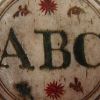
Lid from a box of counters, each inscribed with letters of the alphabet from the Mary Greg Collection

Lid from a box of counters, each inscribed with letters of the alphabet from the Mary Greg Collection

Whilst researching horn books I came across an article by W.S. Churchill, ‘Nuremburg Alphabetical Tokens’ in Lancashire and Cheshire Antiquarian Society, (vol.20, 1902). Churchill talks about traders who worked at the mint in Nuremburg around the mid 16th century. They would make metal counters, usually out of copper or brass with each letter of the alphabet on them, and they were generally one inch in diameter. Some counters had biblical characters, or figures from Roman history on them instead of the alphabet. Although our counters are bone or ivory I thought there could be some link.

Churchill’s article was closely linked with William E.A. Axon’s ‘Horn Books and ABC’s’ from the same journal. It details that hornbooks would also include prayers. The Pater Noster, Ave Maria and the Crede. Juliet O’ Conor also writes about the hornbook noting that they were an item that all strands of society had access to. In its basic form it was an educational aid to poorer children and in its most extravagant the horn book could be made of ivory or silver and become a family heirloom.

‘There are anecdotal references to the use of horn-books made of gingerbread, which meant that a reward for children mastering their letters was readily at hand’

I particularly like this idea!

Melanie

Horn Books

July 24, 2009 The Collection Comments Off on Horn Books

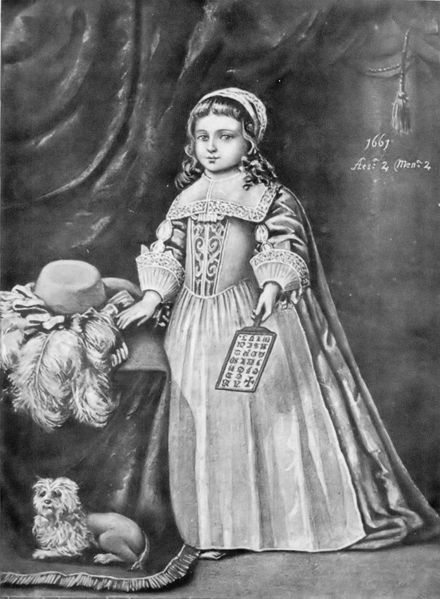
I was interested in the Horn Books that Mary collected so many of and looked up one of the books she gave to the gallery in Aug 1925; History of Horn Books by Tuer. Here is a picture from the book. Hopefully I’ll be able to find the text and learn more about it.  Melanie

young girl holding a hornbook

Miss Campion holding a hornbook, 1661, from Tuer's History of Horn Books

Some Wise Words

July 23, 2009 The Letters 1 Comment

‘We owe it to those who have preceded us and have left us those specimens of their painstaking and beautiful work and to those who will come after us to do likewise, to treasure good work and produce something into which we have put our best, our love, our intelligence, our power.’

Mary Greg, Preface to Catalogue, October 1922 

I like the poignancy of Mary’s words and I suspect that many museum professionals had this sort of ideal in mind when they decided they wanted to work in museums.

Melanie

The Hope Family

July 22, 2009 Mary Greg 2 Comments

After a morning of visiting perhaps every family history website known to man I eventually made some progress. The photographed obituary mentions Mary Greg’s parents Thomas Arthur Hope and Emily Hird Hope. I simply typed this into google and came across an independent site ‘The Family Tree of Peter A. Brown’. He traces the Hope family back to John De Hope (1626-1674)

I focused on Thomas and Emily and discovered they had 12 children! One of Mary’s sisters is the mysterious Rebekah Bateman (1842-1901), named after her grandmother of the same name. Harriet Selina and Arthur are mentioned as in the passport as well as Caroline mentioned in the letters. The children were born in either Sefton or Liverpool, however I couldn’t find Mary’s birth date and place. None of the Mary Hope’s mentioned were born in 1849 and most had died by 1901.  

I intend to draw up a proper family tree in the next few days as the website is a bit disjointed but feel free to look up all the Hope’s in the meantime. You can also look up Births and Deaths. It’s all rather exciting!

Melanie