It’s been rather quiet lately

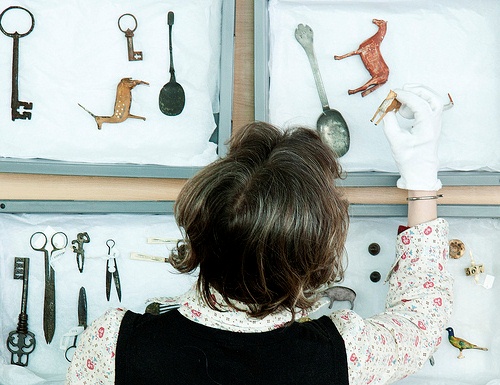
Looking at the collection at Platt Hall Gallery of Costume

On this blog at least. But the Mary Greg project continues to send ripples out across the pond.

At MAG, the Learning Team have been working with the Mary Greg Collection ‘on tour’, thanks to a travelling case made by Karl and Kimberley Foster of Hedsor, and the work of educators Joanne Davies and Amanda McCrann. I hope Joanne’s going to put something up about this project soon.

The collection is also out there in Mouseion, an exhibition in the School of Museum Studies at Leicester University, curated by Alex Woodall and including work by Hazel Jones, both contributors to this blog. Alex was one of the team at MAG who worked on the original Mary Mary project and is now a PhD researcher at Leicester, investigating material approaches to art museum interpretation. The exhibition looks at artists responding to museum collections.

Back in May, Sharon Blakey showed collaborative work made with weaver Ismini Samanidou in response to the collection, in Pairings II at Stroud International Textiles. Last year, Sharon and I presented a paper about the project at the international conference Pairings: Conversations, Collaborations, Materials at Manchester Metropolitan University.

Research continues in partnership with MMU, through Hazel and Sharon’s ongoing investigations and my own. I have just embarked on a PhD which will focus exclusively on Mary’s collection, looking at material across different museums as well as Manchester and exploring different notions of value within the institution of the museum. Hugely exciting, very daunting, and two weeks in, not entirely sure where to start. But looking forward to sharing research over the coming months and contributing to the revitalisation of this space. More to come…

Liz

Looking at objects from the collection

The Mary Effect

July 20, 2010 Uncategorized Comments Off on The Mary Effect

I had a meeting with our fundraising manager a couple of days ago to discuss possible sources of funding to take the Mary Greg project to the next stage. And it happened again. What seems to happen whenever anyone is introduced to this collection for the first time – a passionate, personal, immediate response, an intensely animated conversation and a sense that you’ve just go to know someone a whole lot better than you did an hour ago. So, inspired by the shoes at Platt Hall and Alex’s earlier post about our visit there, this is from Chris Whitfield.

The Wicker Basket
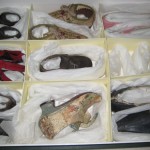
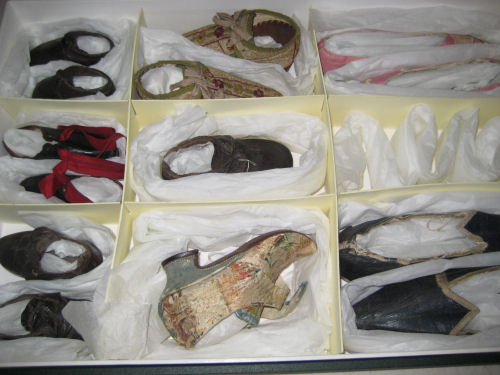
Shoes in the collection at Platt Hall

Shoes in the collection at Platt Hall

Preparing for a recent meeting with Liz regarding fundraising for new developments around the Mary Greg project, I came across the box of shoes at Platt Hall on the website. That image and Alex’s thoughts about the shoes being ‘once full of life’ reminded me of an old wicker basket under the stairs at home, the contents consisting of 7 years of my two young daughters’ shoes as they rapidly outgrow each pair. Overcome with a melancholic desire to take another look at this broken and busted pile, with their etched in scrapes and worn down soles, loaded with memories, stories, tears, laughter and the passing of time, I recall what contains them, an old wicker basket. Not any old wicker basket but one I remember since early childhood, one that has followed me from towns to cities, roads to streets, flats to houses.
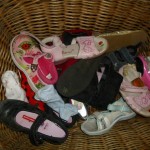
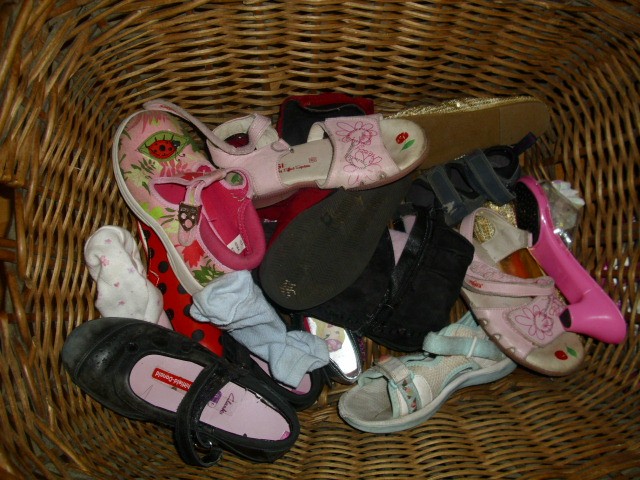
Chris's shoe basket

Chris's shoe basket

That evening whilst investigating the basket contents and taking photographs for the blog as promised, I am more drawn to the basket itself (not least because we didn’t save as many of the girls’ shoes as I’d imagined through my rose tinted glasses!). When an object loaded with history and memories re-presents itself, the stories within it unfold…a particularly brutal break in the wicker is no longer the health and safety hazard it has assumed over the years since it became a mere container of sentimentality, it is a story of a boy and his older brother using the basket as a pretend rally car in a flock wallpapered, axminster covered living room of a family home in a grimy ’70’s steeltown; the boys crashing into the tiled mantle piece, much to the chagrin of their ever loving mother. The space in between the wicker strands takes on huge significance. How how old is that accumulated dust? If you scraped it off, would the lowest layer really be over 40 years old?

And then it reminds me how the power of an inanimate object can trigger a firecracker of memories and emotions. I begin to recall Heidegger’s thoughts describing an individual moving from regarding an object as purely functional to one invested with history, scenarios, nostalgia, epic journeys, toiling in the field, etc. That moment of realisation in which he claims ‘being’ to be most authentic, the ‘and yet…’ moment. I soon realise my thoughts are hopping around 70’s childhood and later transformational periods in life. Thinking about Heidegger reminds me of my friend at university, recalling that TV doc he did. Channel 4 commissioned him to travel the US investigating cults (the fools!). The most compelling scene of the series isn’t about any of the cults themselves, it’s when Steve and the film crew stop the car by the roadside in the desert so they can marvel at a lone tree of objects eerily tied to its brittle branches. The objects? Shoes! Sneakers, work shoes, boots, in all shapes and sizes and states of disrepair, gnarled and melting in the searing heat, hanging from their faded laces. Have I come full circle with all this I ask myself? Perhaps.

Why do we hang on to some things and not others? Why does a hoarder hoard? Perhaps the answer is, they never quite know. Perhaps Mary didn’t know? Maybe the truth of any treasured object has yet to reveal itself. Where are the hoarder’s doubters when the purpose of their hoarding becomes apparent? As absent as the hoarder finding a good reason to throw them out in the first place.

As for the girls’ shoes, how come we only have one of the first tinier than tiny baby shoes? What has become of the other? Landfill? Zoikes!

Posted by Liz

The elusive Greg family

May 19, 2010 Mary Greg 2 Comments

I am at the gallery today trying to hunt down some relations of the Greg family. They seem to have gone all quiet after 1938, when the mill and Norcliffe House were given to the National Trust. However I have made some enquiries with Norcliffe Chapel in Styal, a unitarian chapel that the Greg’s founded in 1823  so hopefully they should get back to me.

I think the strongest link is Alexander Carlton Greg who died in 1990, hopefully he had some children. Another possibility is Henry Gair Greg who was in charge of the Reddish Mill near Stockport that the Greg family also controlled. He died in 1978. Whilst looking for him I came across another mill in the area which had been owned by William Henry Houldsworth. Perhaps the same one that wrote the letter containing Samuel Crompton’s threads?

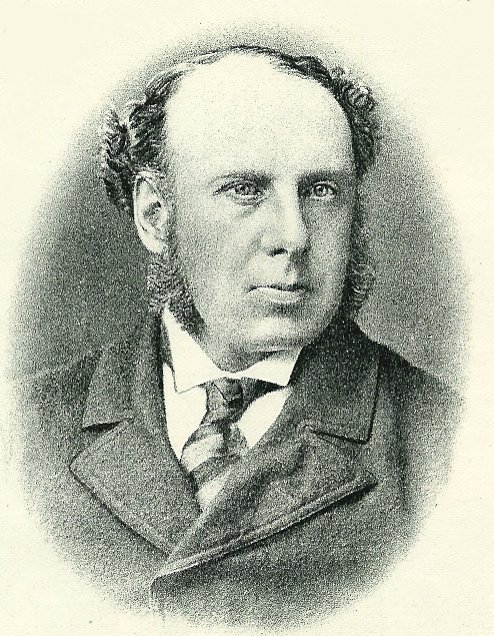
William Henry Houldsworth

So I shall be getting in touch with the National Trust at Styal Mill and Wilmslow’s Record Office and hopefully we can track down some descendents. It’s nice to be back in the Mary Greg -sphere!

Melanie

Mary out in the world.

April 10, 2010 The Collection 1 Comment

This might seem a little trivial but I thought of Mary yesterday whilst shopping. I saw a necklace with lots of miss- matched keys as pendants. One even says Hope on the side of it. Something about it reminded me of her chatelaines too. I wonder what she’d think of her collection used as bling!  

Melanie

Our Blog

March 15, 2010 Developments 1 Comment

Over the weekend I did a bit of tidying up on the blog regarding categories and tags, which meant I had to read every post. It was so lovely to read them all and see how the project has developed and grown. It was so interesting and made me think about Mary Greg again (I have missed her!) It was lovely to read how Sharon and Hazel are developing their work and to see the photos from workshops, as well as new users that have left comments on the site. If you have a spare few hours I strongly suggest reading it all. It was brilliant reading about excitement when someone discovered something new about Mary, the objects or those amazing Crompton threads. Jolly good fun.

Melanie

William Ruskin Butterfield

October 28, 2009 Hidden Stories 3 Comments

You might remember Mr. W. R. Butterfield, a curator from Hastings museum who writes to thank Mr. Batho for recommending that Mrs. Greg send her staff of office with the arms of Hastings to them. It seems that he too like many of the other museum professionals of the time was an interesting character.

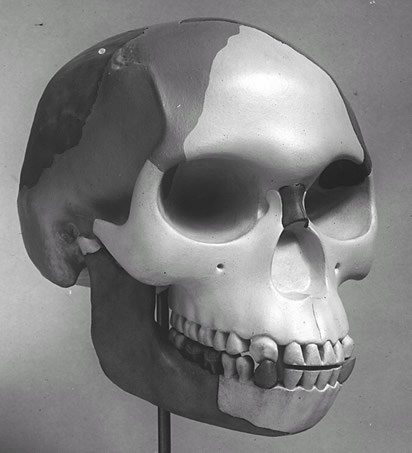
Piltdown Man

Piltdown Man

He was involved in the Piltdown Man Forgery Case, which was perhaps the most famous paleontological hoax in history. The find consisted of fragments of skull and jawbone in the village of Piltdown in Sussex in 1912. It was the ‘discovery’ of Charles Dawson a collector, archaeologist and co-founder of the Hastings and St Leonards Museum Association. The fragments were considered to be remnants of early man and a vital missing link between humans and apes. However, in 1953 the remains were deemed to be a forgery as they discovered it was the jaw bone of an orangutang combined with the skull of a modern human.

Paleontologists had doubts from the beginning and tests concluded it to be a forgery yet most of the scientific community did not acknowledge it for over 30 years. The forger has never been revealed however, Wiliam Ruskin Butterfield is one of the suspects!

Melanie

Thomas Alfred Coward

October 28, 2009 Hidden Stories 1 Comment

T. A. Coward, acting keeper of Manchester Museum writes to Mr. Batho in 1922 thanking him for the ‘very nice specimen of Platypus from Mrs. Greg’. I emailed the museum to find out more about him. He was an ornithologist and in the 1980’s George Fildes compiled notes on his history.

Thomas Alfred Coward, M.Sc

T.A Coward was a famous Cheshire Naturalist and author of popular ornithological books and had a long and influential association with the Manchester Museum. He served 19 years on the Museum Committee. He was born and died in Bowden, not far from the River Bollin where his house still stands marked with a blue plaque in his honour.

Coward was in his time President of the Manchester Literary and Philosophical Society and a fellow of the Zoological and Entomological Societies.

His books include…

Birds of Cheshire 1900

The Vertebrate Fauna of Cheshire and Liverpool Bay 1910

Birds of the British Isles and their Eggs 1919.

Melanie

Arthur Knowles Sabin

In searching for the relatives of the correspondents I’m discovering all sorts. Mr Sabin, Mary’s friend from Bethnal Green Museum, now the V&A Museum of Childhood was a poet! His works include The Death of Icarus. He also was an  early founder of the Samurai Press.

http://www.barnes-history.org.uk/printer.html

Ernest Oswald Fordham

October 23, 2009 Hidden Stories 1 Comment

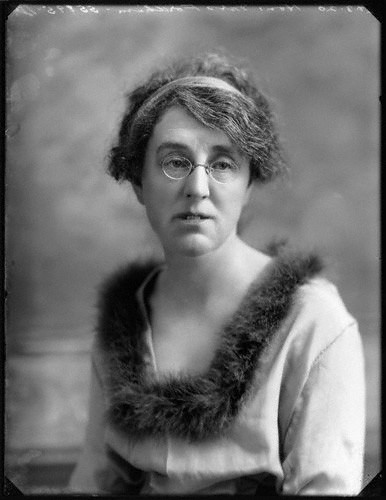
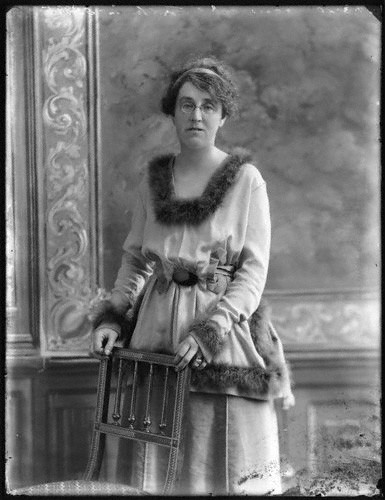
I have documented the letters on to the database and now I’m dealing with all the copyright issues surrounding them so I am searching for correspondents dates of birth and death. This afternoon I’ve been looking into Mr. Fordham and haven’t found anything yet, but in a strange turn of events I have found some photographs of his wife taken by Bassano in 1920, that are in the National Portrait Gallery.

Emily Mary Fordham

Emily Mary Fordham 2

 Melanie

Monkey on a Stick

September 30, 2009 The Collection Comments Off on Monkey on a Stick

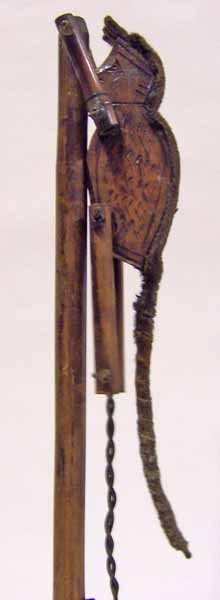
Whilst I was researching objects, Sharon asked me to find out about a strange item: Monkey on a stick, handmade by a Mr. Carrington of Oldham and given to the gallery by Mary as a gift. At first I couldn’t find it but I found it just by chance today. (Always the case, you never find it when you’re looking for it!) However their appears to be two ‘monkey on stick’ toys, it was clearly popular. I have found two photos the second looks more home made so I think it could be this one that was made by Mr. Carrington.

Monkey on a stick made by Mr. Carrington of Oldham

Monkey on a stick 1922.542

close-up

Monkey on a stick M104155

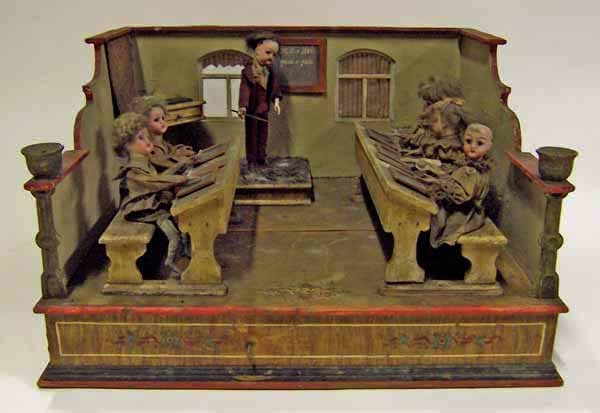
Also I think I found the miniature school bought from Debenham and Freebody’s Antique Galleries that was mentioned in a letter dated 26th January 1928. However it was accessioned in 1922 so it might not be relevant
MelanieAn old schoolroom 1922.93